
Recycling Resources for Municipalities
Centralized data, education tools and contract resources to help municipal recycling programs succeed across Pinellas County.
Quick Access: What Do You Need Today?
View tons recycled, participation trends, contamination rates and capture rates.
Access standardized labels, printable flyers, battery guidance, the Recycle Guide and the Where Does It Go? Search Tool.
Find contract best practices and municipal contract documents.
Most Requested Resources
Tons Recycled (2025)
Municipalities can use this data for benchmarking and reporting, and the County uses it for preparing the annual Solid Waste Management Report.
Standardized Recycling Labels
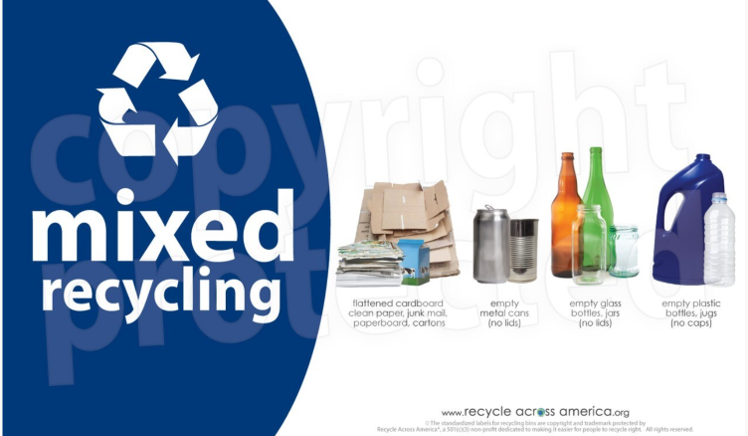
Reduce contamination and improve clarity at the bin with standardized labels licensed through Recycle Across America (RAA). Customizable for carts, dumpsters, public spaces, multifamily properties, school and government buildings.
Email recycle@pinellas.gov to request labels.
Municipalities purchase labels directly; the County covers the design and licensing costs.
Printable Flyers
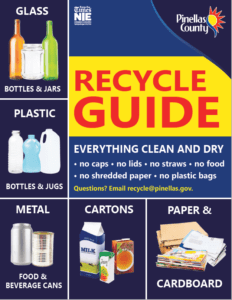
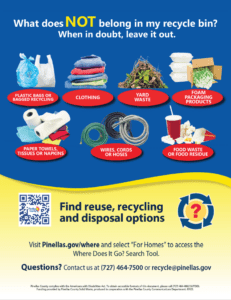
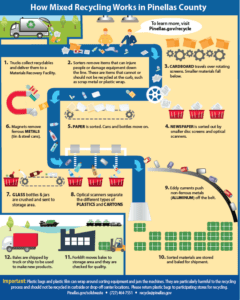
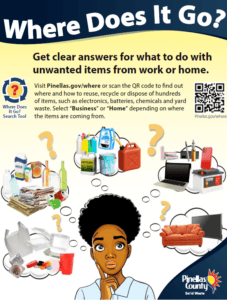
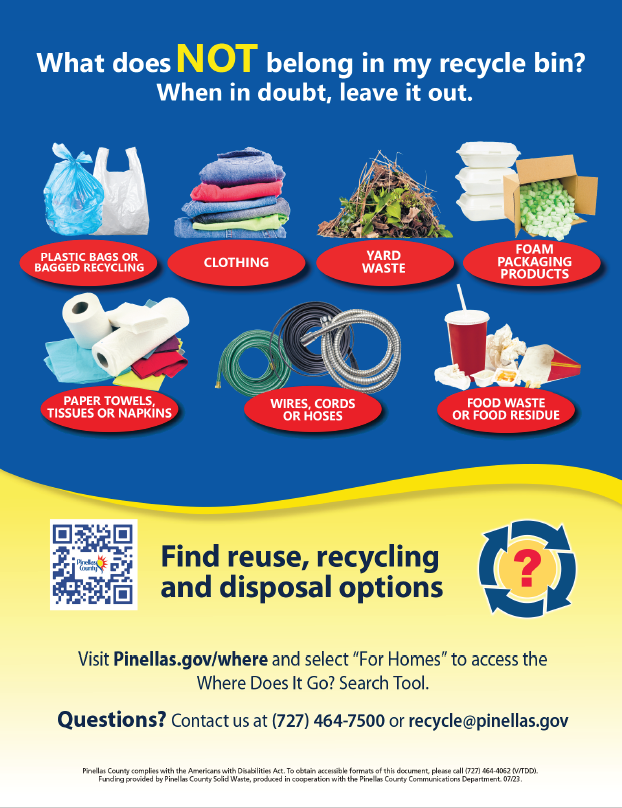
Download ready-to-print materials showing what belongs–and doesn’t belong–in the recycling bin. Ideal for utility billing inserts, events, multifamily outreach and public spaces. Click each image below to access the printable flyer.
Recycle Guide
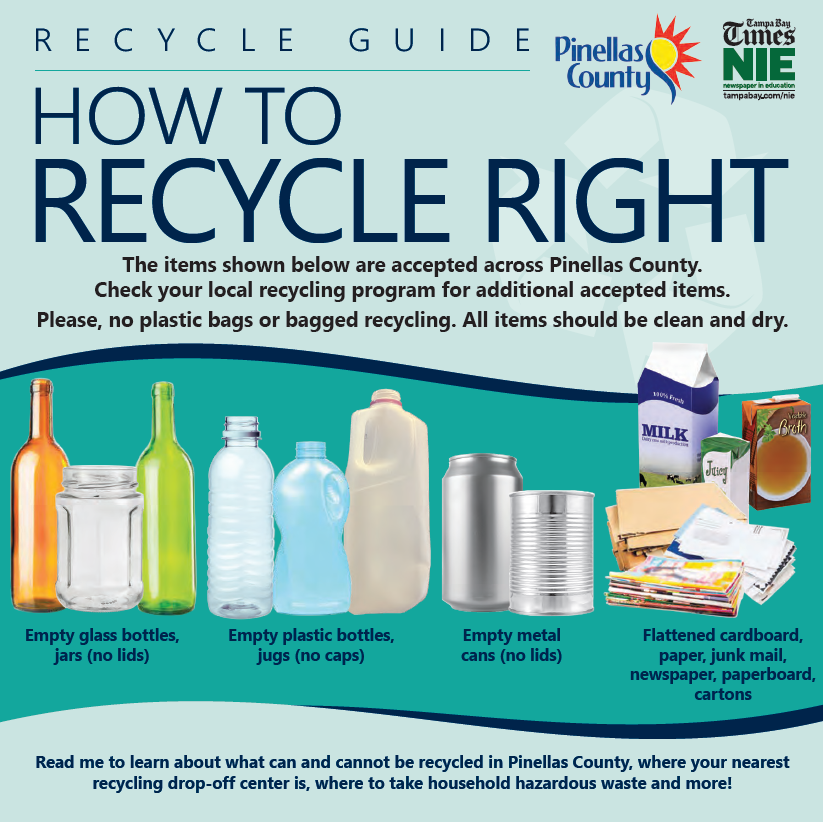
Countywide recycling instructions designed to unify messaging across all municipalities and haulers.
Contract Guidance
Best practices developed through Pinellas Partners in Recycling to strengthen municipal recycling collection, processing and commodity marketing contracts. Includes service standards, pricing structures, contamination management, revenue sharing, reporting expectations and education requirements.
Key Countywide Opportunities
Based on recent data, these areas represent the strongest opportunities for improving recycling performance across Pinellas County.
Increase Multifamily Recycling Access
Only 64% of multifamily homes have access to recycling, despite a 91% participation rate when services are provided. Expanding multifamily access is one of the most effective ways to increase countywide recycling.
Improve Battery Disposal Awareness
About one in five households places rechargeable batteries in the trash or recycling bin, creating fire risks. Many residents are unaware that their devices contain hazardous batteries. Visit Pinellas.gov/batteries for disposal guidance and outreach materials.
Strengthen Capture Rates
Only 47% of recyclable materials generated are placed in recycling bins. This indicates strong opportunities to improve both residential and commercial recycling programs.
Data
Tons Recycled (2025)
The table below contains the tons of mixed recyclables collected and recycled through curbside residential and commercial programs in Pinellas County in calendar year 2025. This data is reported by municipalities to Pinellas County, supporting the County’s preparation of the annual Solid Waste Management Report submitted to the Florida Department of Environmental Protection. Communities can use this information to benchmark program performance, track trends and identify opportunities to strengthen their recycling efforts.
| Municipality or Program | Tons Recycled in 2025 |
| St. Petersburg | 13,253.62 |
| Clearwater | 8,547.32 |
| Largo | 5,786.09 |
| Dunedin | 2,593.26 |
| County Recycling Drop-off Sites | 1,919.69 |
| Safety Harbor | 1,565.37 |
| Pinellas Park | 1,435.42 |
| Seminole | 1,156.28 |
| Tarpon Springs | 1,105.91 |
| Oldsmar | 789.86 |
| Treasure Island | 631.56 |
| Indian Rocks Beach | 571.80 |
| St. Pete Beach | 537.00 |
| Gulfport | 496.61 |
| Madeira Beach | 351.89 |
| Belleair | 314.28 |
| North Redington Beach | 168.81 |
| Belleair Beach | 144.20 |
| Redington Shores | 137.00 |
| Kenneth City | 127.08 |
| South Pasadena | 120.00 |
| Indian Shores | 84.00 |
| Redington Shores | 76.30 |
| Belleair Bluffs | 41.41 |
| Belleair Shore | 6.00 |
Recycling Participation Trends
Understanding how residents participate in recycling programs helps municipalities identify service gaps, target outreach and plan improvements. The findings below from the 2026 Residential Recycling Awareness Survey highlight how many households recycle, what access they have and the motivations behind their behavior. Communities can use these insights to strengthen education efforts, expand service availability and increase overall program effectiveness.
- 90% of residents who live in single-family homes recycle.
This high level of engagement shows that residents value recycling and will use services when available. - 91% of multifamily residents recycle when services are provided.
Only 64% of residents in multifamily homes have access to recycling, and an additional 68% would recycle if they had access. Expanding recycling access for multifamily households is a significant opportunity to increase countywide recycling. - By and large, residents recycle to protect “the Earth” and because it’s simply the “right thing to do.”
- Residents trust the recycling system. 80% agree that what they place in the bin is recycled.
This strong level of confidence supports continued investment in municipal recycling programs. - County recycling resources provide standardized messaging that municipalities can use countywide.
Nearly half of residents rely on County-produced materials for recycling information, including the Recycle Guide. Guide/list sources rose from 3% in 2024 to 24% in 2026. Using these shared tools helps reduce confusion and support consistent recycling behavior.
Source: 2026 Residential Recycling Awareness Survey.
Countywide Contamination Rate
Contamination refers to items people put in recycling bins that don’t belong there. The average countywide contamination rate of mixed recycling is 21.7% by weight. Averages vary by community and program type, but The Recycling Partnership estimates a national average contamination rate of 17%.
Sources:
- 2024 Pinellas County Municipal and County Recyclables Composition Study
- The Recycling Partnership’s 2020 State of Curbside Recycling
Recycling Capture Rates
About 11.6% of the trash we receive at the Solid Waste Disposal Complex is items that could have been recycled. This means people in Pinellas County place about 120,300 tons of mixed recyclables in the trash instead of a recycling bin, based on 2025 data.
Mixed recyclables include plastic bottles, plastic jugs, paper, cardboard, cartons and glass and metal containers or the items on the cover of the Recycle Guide.
About 106,700 tons of commercial and residential mixed recyclables were recycled in Pinellas County in 2025.
Based on the amount of trash managed at the Solid Waste Disposal Complex, we estimate that only 47% of recyclable materials generated in Pinellas County were placed in a recycling bin. This shows that there is an opportunity to strengthen local mixed recycling programs, especially for multi-family homes and commercial properties.
Sources:
Contracts
Strengthen your recycling collection, processing and commodity marketing contracts with practical, experience-based guidance developed through Pinellas Partners in Recycling. This document highlights the critical contract elements that influence program performance, such as service standards, contamination management, pricing structures, revenue sharing, reporting expectations and education requirements.
Whether you’re drafting a new agreement or updating an existing one, these best practices can help improve accountability, reduce risk and ensure your recycling program is both cost-effective and resilient.
Municipal Contract Documents
Explore how other Pinellas County municipalities structure their recycling, collection and commodity marketing contracts. This database contains a summary of municipal recycling collection and processing contracts, including downloadable documents and the following information:
- Contractor
- Pricing
- Services
- Expiration dates and extensions
- Annual recycling tonnage
Reviewing this data can help you benchmark your program, identify improvement opportunities and make informed decisions when negotiations or renewing agreements.
View the database of municipal recycling collection and processing contracts.*
*Note: this is a link to the Pinellas Partners in Recycling SharePoint site, and you must be granted access to view it. Contact recycle@pinellas.gov to request access.
Education
Labels
The County holds a licensing agreement with Recycle Across America (RAA), allowing all municipalities to use standardized labels. These labels are designed to improve clarity at the bin and reduce contamination by showing exactly what materials are accepted. The County’s custom labels can be resized to fit:
- Residential carts
- Dumpsters
- Containers at multifamily complexes
- Bins in public spaces, schools and government buildings
- Drop-off centers
These labels make it easy for municipalities to ensure consistent, recognizable recycling instructions across all program types.
Municipalities should email recycle@pinellas.gov to request RAA labels. Municipalities are responsible for paying for the labels themselves. However, the County will cover licensing and design fees, collaborate with RAA to create new labels if necessary and provide pricing that municipalities can leverage for printing with an approved printing company.
Printable Flyers
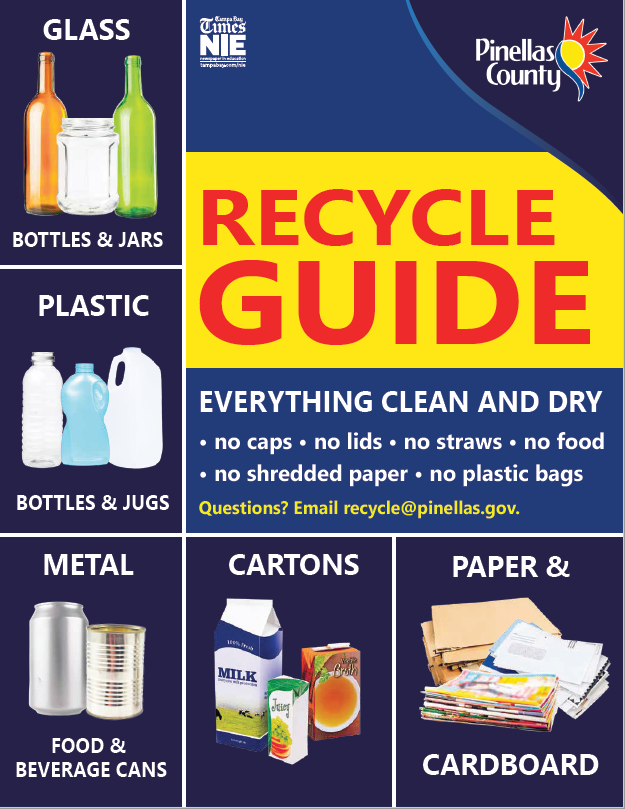
Need printable documents listing what can and cannot be placed in your recycling bin? View, download and print the flyers below!
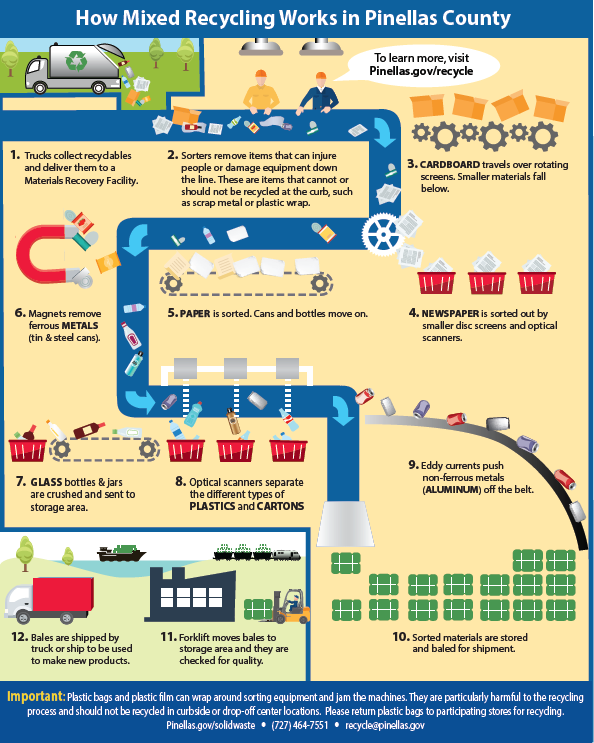
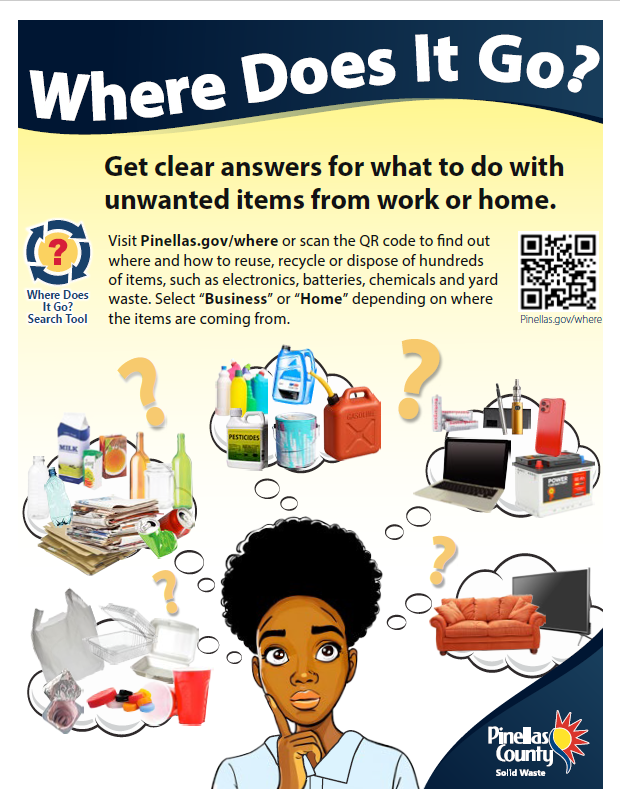
Recycle Guide
While recycling collection is managed independently by municipalities and private haulers, the Recycle Guide provides universal recycling guidelines to all Pinellas County residents.
Click the image to the right to access the Recycle Guide.
Batteries
On average, there are 24 electronic devices per American household, many of which contain hazardous batteries (Source: Environmental Protection Agency). Some batteries pose a threat to health and safety because they can spark fires when crushed. Certain batteries must be taken to a drop-off center for proper disposal, but this is a knowledge gap among Pinellas County residents. About one in five Pinellas County residents reported placing rechargeable batteries in the trash or recycling bin at home. Another fifth reported not having or using any. This further demonstrates a barrier to addressing the knowledge gap: people don’t know their devices contain batteries in the first place.
It is important and worthwhile to focus efforts on expanding education around how to properly dispose of batteries.
View Pinellas County’s resource for all things batteries at Pinellas.gov/batteries.
Source: 2026 Pinellas County Residential Recycling Awareness Survey
Where Does It Go? Search Tool
The Where Does It Go? Search Tool is a searchable database that connects you to the right donation centers, recycling facilities, online takeback programs, safe disposal locations and more.
The search tool can be embedded as a widget on partner websites. Contact recycle@pinellas.gov for the embed code.
Additional Resources
- Where Does It Go? Search Tool
- Recycle Guide & Downloadable Signage
- Household Chemical Collection
- Collection: Trash & Recycling
- Hours: Solid Waste Disposal Complex
- Disposal Fee Information
- Educational Resources: Trash and Recycling
- Recycling FAQ
- Map of Recycling Drop-Off Centers
- Artificial Reef Program
- Mulch Pickup Program
- For Businesses: Trash & Recycling Resources
- How Mixed Recycling Works In Pinellas County
- Video Library: Trash and Recycling
- Holiday and Gift-Giving Guide
- Pinellas Partners in Recycling
- Waste-to-Energy Facility
- Bridgeway Acres Landfill
- Solid Waste Master Plan
- Solid Waste Disposal Accounts
- Lealman Trash and Recycling Collection
- Tampa Bay Recycles
- Why Recycling Is Important
- Discover Careers with Pinellas County Solid Waste
Updated on July 21, 2026.